Polylingual Hungarian Nationalism in History and Historiography
Abstract:
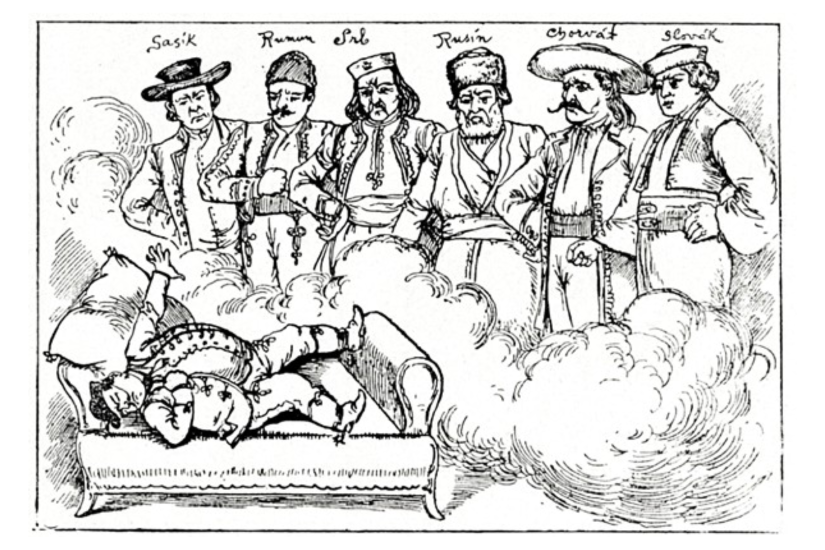
Central European historiography typically judges Hungarian nationalism harshly, associating it with chauvinism and ethnic intolerance. Yet non-Magyar citizens of Hungary cultivated alternate visions of polylingual “Hungarian nationalism.” What might be called the Hungar nemzet nationalism distinguished between “Hungarian” and “Magyar,” showed enthusiasm for Hungary, and sought to replace the monolingual “Magyar Political Nation” with polylingual Hungarian nationalism. This talk traces the intellectual origins of Hungar nemzet nationalism in light of existing historiography, suggesting that it sheds new light on key events of nineteenth-century Hungarian history, notably the 1848 revolution. Scholars should rethink the meaning of “Hungarian” nationalism.
Speaker:
Alexander Maxwell is associate professor at the Victoria University of Wellington in New Zealand and the director of the Antipodean East European Study Group. In his research, Alexander deals with various aspects of national movements in the Habsburg Empire and its successor states in the „long 19th century”. His numerous publications address linguistic nationalism, the impact of nationalism on everyday life, sexuality and fashion, as well as the social background of nationalist activists. His most recent works include the edited volumes „Habsburg Civil Servants: Between Civil Society and the State” (together with Daša Ličen; Berghahn, 2025), „Pan-nationalism as a category in theory and practice” (Routledge, 2024) and the monograph „Everyday nationalism in Hungary, 1789 – 1867” (De Gruyter, 2019).